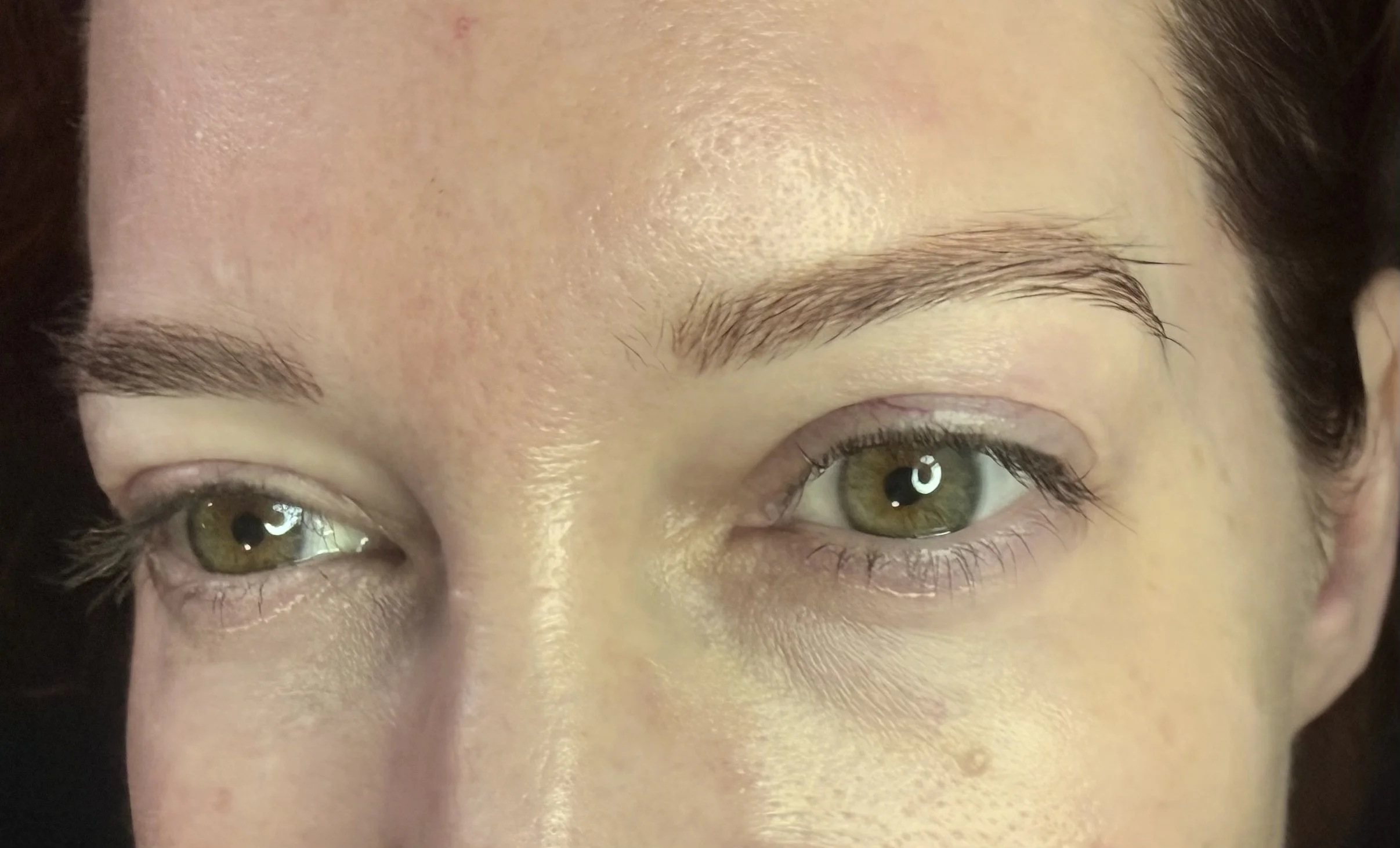
Taking Your Brows From 2016 to 2026: Why Less Is More
If you had your brows done around 2016, you probably remember the look: bold shapes, crisp edges, defined fronts and plenty of pigment.
At the time, that was the brow.
But permanent makeup has evolved — a lot.
In 2026, we’re moving away from the idea that permanent brows need to look perfectly filled in at all times. Today’s permanent makeup is softer, airier and much more natural.
The goal?
Your brows, but better.
Think soft fronts. Natural dimension. Fine hairstrokes. Skin showing between strokes. Brows that complement your face instead of being the first thing you notice when you look in the mirror.
2026 Brow Trends: Less Is More
One of the biggest changes in permanent makeup is that we’re no longer trying to create a completely “finished” makeup look with pigment alone.
Whether we’re creating nano brows, microblading, combination brows or soft powder brows, I want the finished result to work with your natural brow hair — not overpower it.
That means we don’t necessarily need pigment in every available space.
Soft fronts are a huge part of the modern brow. The beginning of your brow should transition naturally instead of starting with a heavy, defined block of color.
With nano brows and hairstroke techniques, intentionally leaving negative space between strokes can actually make the finished brow look more realistic. That little bit of skin showing through is a good thing.
And here’s something I tell my clients:
You can always add makeup. You can’t take permanent makeup off at the end of the night.
Your permanent brows should give you a beautiful everyday foundation. If you want to add a little pencil, powder or gel for a night out, you still have that option.
What If You Still Have Your 2016 Permanent Brows?
This is where my approach has changed significantly over the years.
Permanent makeup is designed to fade, but fading doesn’t always mean disappearing completely.
If you’ve been maintaining your brows for years, you may still have quite a bit of old pigment in the skin. Over time, that pigment can become cool, gray, ashy or simply too dense to create the soft look you see in today’s natural permanent brows.
And adding more pigment on top isn’t always the answer.
Sometimes the best thing we can do for your brows is actually take something away.
Saline Brow Removal Doesn’t Always Mean Starting Completely Over
When clients hear permanent makeup removal, they sometimes assume I’m talking about completely removing their brows and starting from scratch.
Not necessarily.
Saline brow removal can be used to lighten old permanent makeup enough to give us room to work again.
If an older brow is too saturated, there may not be enough visible skin for me to create delicate hairstrokes or a softer shape. Adding fresh strokes over a dense background can defeat the entire purpose — you still end up with a solid-looking brow.
By lightening some of that old pigment first, we may be able to create space for a softer, more dimensional result later.
Sometimes we need one removal session. Sometimes we need more. Every client’s skin, pigment and previous permanent makeup are different.
The goal isn’t always to erase what you have.
Sometimes we’re simply making room for something better.
Do You Really Need an Annual Brow Touch-Up?
This is another major change in how I approach permanent makeup in 2026:
Just because another year has passed does not automatically mean you need a brow touch-up.
For years, “annual touch-up” became standard terminology in the permanent makeup industry. Clients became accustomed to coming back every 12 months and adding more pigment.
But if there is still plenty of pigment in your skin, adding more simply because a year has passed can eventually lead to oversaturated brows.
Think of permanent makeup like layers.
If we continue putting new pigment over old pigment without allowing enough of it to fade, those layers can build up. Eventually, beautiful individual hairstrokes can lose their definition and the brow can start looking more solid.
That’s exactly what I’m trying to prevent.
I’d rather tell you, “You’re not ready yet. Let’s wait.”
Depending on your skin, lifestyle, technique and pigment retention, that might mean waiting 18 months, two years or even longer between refresh appointments.
I want to see what your brows actually need — not what the calendar says they should need.
Better Permanent Makeup Means Thinking Years Ahead
When I’m working on your brows, I’m not only thinking about what they’re going to look like when you leave my studio.
I’m thinking about what they’ll look like healed.
I’m thinking about how they’ll fade.
I’m thinking about what they’ll look like several years from now.
And I’m thinking about whether we’re leaving ourselves options for the future.
Sometimes that means adding pigment.
Sometimes it means stretching your next appointment.
And sometimes it means using saline removal to lighten previous work before we add anything new.
Permanent makeup has changed tremendously over the last decade, and that’s a good thing.
The 2026 brow isn’t bigger, darker or more perfect. It’s more believable.
Soft fronts. Airy hairstrokes. Natural dimension. A little skin showing through.
Your brows — just better.